
Author Details : Anamika Koshti | Sharda School Of Pharmacy | Doctor of Pharmacy (Pharm-D), 5th Year
Published On : 17th June 2026
Introduction
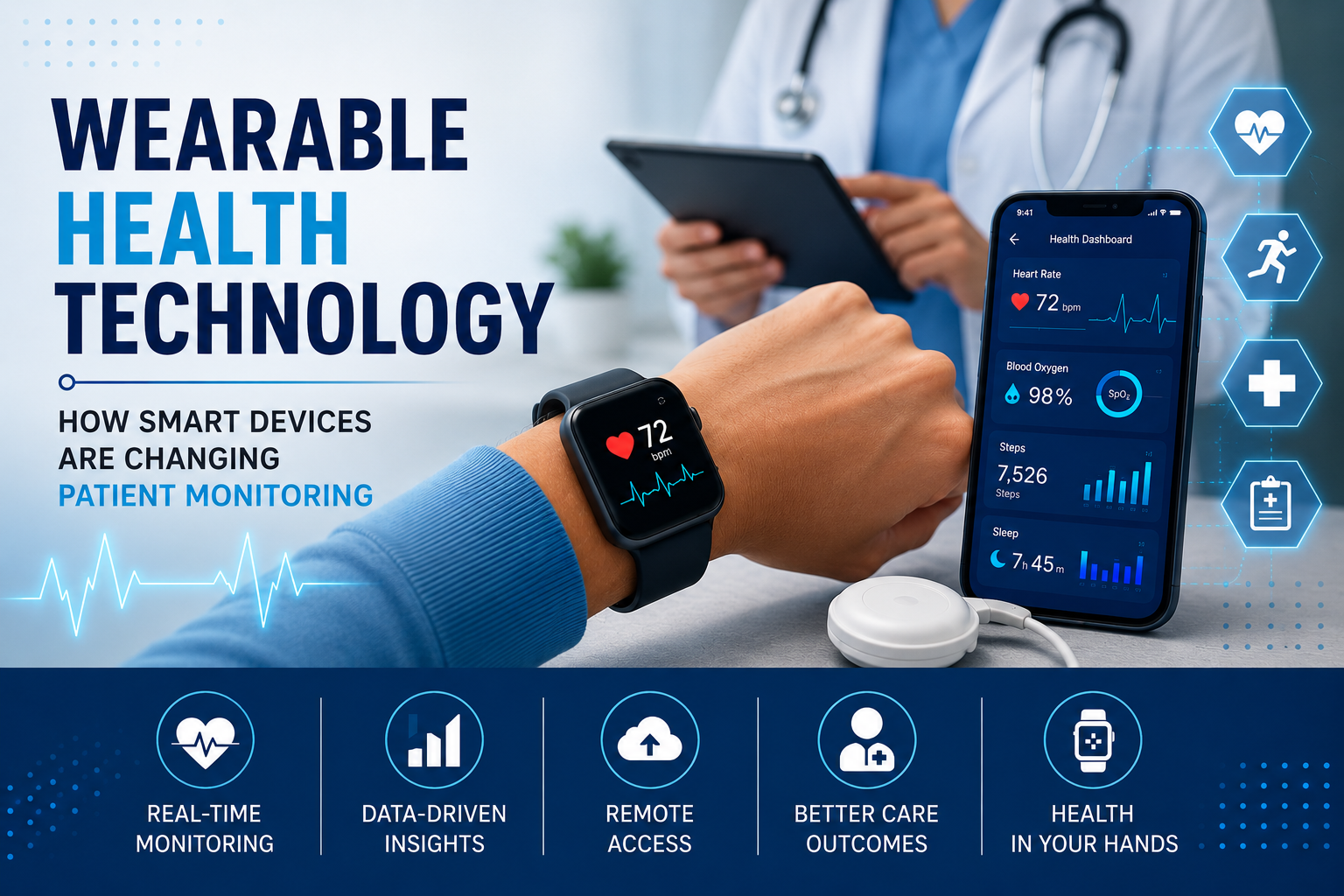
Healthcare is not constrained to hospitals and clinics anymore. Devices such as smartwatches, fitness trackers, and continuous glucose monitors are making it easier than ever for people to keep track of their health in real time. They monitor an enormous amount of metrics related to human being parameters, including heart rate, physical activity, sleep patterns and blood glucose levels, helping the customers understand and manage their health better. Meanwhile, this data can be incorporated into clinical decision support systems to help healthcare professionals and allow patient monitoring at home. With an increasing emphasis on prevention and personalisation in healthcare, wearables are becoming vital to enhance patient engagement and disease management as well as general health outcomes. To better understand their growing role in healthcare, it is important to first understand what wearable health technologies are and how they function.
What Is Wearable Health Technology?
Wearable health technology refers to electronic tools worn on the body used to track real time and continuously collect health-related data. These are different from the typical medical equipment utilized on hospital visits because these devices can continuously monitor health data during daily life. Some of the most recognized examples are smartwatch, fitness tracker, continuous glucose monitors (CGMs), wearable blood pressure monitor and smart biosensors. They help patients and healthcare professionals monitor health better by providing sensors, wireless connectivity and data analytics. The increasing use of these devices in everyday life has significantly changed the way patients are monitored and managed.
How Wearable Devices Are Transforming Patient Monitoring?

1.Continuous Health Monitoring
Patient monitoring has traditionally been limited to periodic measurements performed only when a patient is in the clinic. Since health conditions can change throughout the day, occasional measurements may not always provide a complete picture of a patient’s health status.
Wearable devices address this limitation by continuously collecting physiological data: heart rate, activity levels, sleep quality, blood glucose levels and oxygen saturation levels. This continuous flow of information helps healthcare professionals identify potential health concerns earlier than would be possible through routine clinic visits alone.
For example, a smartwatch can detect irregular heart rhythms before symptoms become noticeable allowing timely medical evaluation and intervention.
2. Supporting Remote Patient Care
The growing adoption of telemedicine has increased the importance of remote patient monitoring. Instead of treating patients in hospitals, healthcare professionals can remotely monitor individuals suffering from chronic health conditions using wearable devices over a longer period of time.
Remote monitoring can improve treatment adherence, enhance patient convenience, and maintain continuous clinical oversight.
3. Improving Chronic Disease Management
Effective management of chronic diseases such as diabetes, cardiovascular disease, and hypertension requires regular monitoring and long-term follow-up.
Wearable technologies have significantly improved disease monitoring by providing patients and healthcare professionals with continuous real-time health data. Take, for example, continuous glucose monitoring systems that enable patients to continue checking on blood glucose fluctuations during day without finger prick testing.
Likewise, wearable cardiac monitoring can help identify arrhythmias and provide an assessment of treatment effectiveness and risk for detect potential complications at an early stage.
Benefits of Wearable Health Technology:

One of the most significant benefits of wearable health technology is increased patient engagement. These devices motivate users to actively participate in their health by providing real-time feedback of different parameters such as physical activity, sleep and heart rate.
Continuous monitoring will allow the discovery of abnormal changes in vital signs which could offer prompt assessment and intervention. It is especially useful for those who have chronic illnesses, like diabetes or diseases of the heart.
Despite these advantages, wearable health technologies also present several challenges that must be addressed to ensure their safe and effective use in healthcare settings.
Challenges and Limitations of Wearable Health Technology
Data accuracy is another great concern here. Although these devices generate useful health related data, their readings are not as accurate as clinical-grade medical devices. A few factors such as wrong usage, positioning of devices and movement can hamper the results.
Maintaining the privacy and security of this data is another major challenge. Wearable devices that continuously capture sensitive health data, posing a risk of exposure.
Another limitation is accessibility. These technologies can present challenges for some individuals, especially older adults and people with lower digital literacy skills. Moreover, the cost of advanced wearable technology may also limit access for some populations.
Prolonged monitoring can also create a huge amount of data, which can be overwhelming for users or doctors. Consequently, the information provided by wearables should be viewed with caution and complemented by a professional medical assessment. As researchers continue working to overcome these limitations, the future of wearable healthcare appears increasingly promising.
The Future of Wearable Health Technology
Wearable health technology has a future beyond basic fitness monitoring. Advances in artificial intelligence (AI), biosensors, and digital health platforms are expected to make wearable devices more accurate and clinically useful. In clinics, future wearables will be leveraged to detect diseases at earlier stages, validate risks of chronic diseases and offer personalized recommendations based on real-time data.
Experts are also working on smart patches and wearable sensors that can monitor numerous health parameters at the same time. Telemedicine and electronic health records integration to enhance patient care and clinical decision making. As technology continues to evolve, wearable devices are expected to play an increasingly important role in preventive, personalized, and patient-centered healthcare.
Key Takeaways
• Continuous real-time monitoring of vital parameters.
• Wearable devices in the form of smartwatches, fitness trackers and continuous glucose monitors are enhancing prevention services and chronic disease management while improving patient engagement.
• Wearable technology assists in remote patient monitoring, decreasing in-hospital visit frequency.
• Data accuracy, privacy, accessibility, and information management issues need to be dealt with before further widespread adoption is possible.
• Advancements in AI and digital health could increase the role of wearables.
Conclusion
Wearable health device technology is changing patient monitoring, expanding the ability to continuously track healthcare outside of traditional environments. They allow for remote patient care, chronic disease management and preventive healthcare; increasing consumer engagement in managing their own health. Wearable technologies are only going to become a more integral part of our lives as digital healthcare continues to evolve. By connecting real-time health data with individuals and healthcare providers, such innovations promote a more accessible, efficient and patient-centered healthcare system.
References
1. Patel S, Park H, Bonato P, Chan L, Rodgers M. A review of wearable sensors and systems with application in rehabilitation. Journal of NeuroEngineering and Rehabilitation. 2012;9:21.
2. Piwek L, Ellis DA, Andrews S, Joinson A. The rise of consumer health wearables: Promises and barriers. PLoS Medicine. 2016;13(2):e1001953.
3. Dunn J, Runge R, Snyder M. Wearables and the medical revolution. NPJ Digital Medicine. 2018;1:5.
4. Smuck M, Odonkor CA, Wilt JK, Schmidt N, Swiernik MA. The emerging clinical role of wearables: Factors for successful implementation in healthcare. NPJ Digital Medicine. 2021;4:45.
Reviewed and approved by the
Clinoryx Academy Editorial Team
Varrun Shah
Editor, Clinoryx Academy
Khushi Pandya
Executive Director & Editor
Leave a Reply