
Author Details : Dr Veena NJ | Ayurvedic doctor, Yoga instructor, Hospital administrator | Founder of VedAyush Health Hub
Published On : 24 June 2026
Have you ever wondered why night means sleep and day means awakeness? There is a biological process that explains the sleep-wake cycle. The circadian rhythm regulates the sleep-wake cycle, an internal biological clock that synchronizes physiological functions with the day-night cycle. Ayurvedic tridosha theory offers a holistic framework for restoring circadian balance disrupted by the modern lifestyle.
Ashtanga Hridaya explains sleep as,
निद्रायत्तं सुखं दुःखं पुष्टिः कार्श्यं बलाबलम् ।
वृषता क्लैब्यं ज्ञानमज्ञानं जीवितं न च ॥
Nidrayattham sukham dukham pushtihi karshyam balaabalam
Vrushataa klaibyam gnanamagnaanam jeevitam na cha.
- Sleep is the deciding factor of an individual’s happiness, sorrow, strength, and weakness.
- Sleep is necessary not only for physical and mental health, but also for an individual’s reproductive capacity.
- Lack of sleep disrupts cognitive function, mental alertness, and intellectual performance.
- Life itself depends on sleep.
- Sleep is the physiological process that determines the overall well-being of an individual’s health.
What are Circadian Rhythms?
- The word Circadian is derived from Latin: circa means “about”,diem means “day”.1
- It refers to the biological process that includes physical, mental, and behavioural changes a human body experiences over a 24-hour cycle.
- It is mainly influenced by light and dark.
- Most of the living organisms have a circadian rhythm; in the human body, almost every tissue and organ has its own circadian rhythm. Collectively, they are synchronised to the daily cycle of day and night.
- Think of Circadian rhythm as your body’s built in time table just like you follow a routine time table in school or office in the same way your body has internal clock for 24hrs day-night cycle that makes you follow sleep at night, wake up naturally at morning, eat food when hungry, your energy level raises and drops throughout the day, and many other functions in the body, ensuring that different organs and processes perform in coordination with one other at right time.
Biological clock and its relation with circadian rhythm.
- The biological clock is a body’s built-in clock that regulates circadian rhythm.
- The biological clock is a clock mechanism, and the circadian rhythm is the schedule created by it.
- Biological clock signals when it is time to sleep, wake up, eat, and release hormones, while the recurring pattern of sleep-wake cycle, alertness, metabolism, and body temperature are circadian rhythms.
- Together, they both help bodily functions align with environmental cues such as light and darkness.
How does the circadian rhythm influence the sleep-wake cycle?
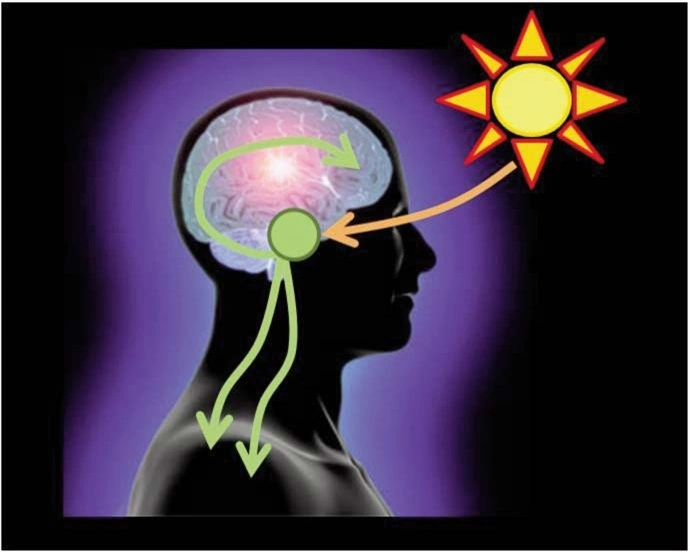
The suprachiasmatic nucleus (SCN), cortisol, and melatonin collectively work together to regulate the circadian rhythm, thus helping in maintaining a healthy sleep-wake cycle.
Suprachiasmatic nucleus (SCN)
- It is considered the body’s master biological clock, located in the hypothalamus (part of the brain).1,2
- It receives signals from the eye about the light and dark, and accordingly helps in the 24-hour day-night physiological process.
Cortisol, a wake-up hormone.
- In response to sunlight, the cortisol levels typically peak in the early morning hours.
- Thus promoting wakefulness, alertness, cognitive performance, readiness for daytime activities, and energy.2,3
Melatonin promotes sleep
- As the day progresses, the cortisol level starts to drop. 2,3
- During the evening and night, low cortisol levels promote melatonin production.
- In that way, the body and mind relax and get ready for sleep.

- In response to daylight SCN signals, the body produces cortisol levels and suppresses melatonin production.
- Thus, melatonin and cortisol work together in a coordinated manner: cortisol encourages wakefulness, while melatonin promotes relaxation and sleep.
The SCN, the master biological clock, aids in the rhythmic secretion of cortisol and melatonin.
Light-dark cycle: SCN synchronizes both hormones in response to light and dark.
Morning: Cortisol levels are at peak, and low melatonin levels encourage alertness and wakefulness.
Evening and night: Low cortisol levels, high melatonin levels promote relaxation and sleep.
GABAergic system (Gamma-Aminobutyric Acid)2,3
- The brain’s primary inhibitory neurotransmitter (calming messenger).
- Acts as a brake pedal, reduces excessive brain activity, reduces anxiety and nervous tension, helps the mind to relax, manages stress, and prepares the body for sleep.
Serotonergic systems (5-HT neurotransmitter)2,3
- A messenger of the brain, often called the feel-good natural chemical of the Brain.
- Helps the body to produce melatonin, the hormone that signals when to sleep.
- Regulates good mood and helps in maintaining healthy sleep patterns.
- Reduces stress and anxiety, thus helping in overall well-being.
How does the Ayurvedic tridosha theory influence the sleep-wake cycle?
- According to Ayurveda, the sleep-wake cycle is governed by the tridoshas vata, pitta, and kapha doshas throughout the day and night.
- Ayurveda considers tridoshas as fundamental biological energies that regulate all physiological functions of the body.
- Cyclical dominance of these throughout the day and night aids in the sleep-wake cycle, digestion, metabolism, and energy levels. Thus, helps the body align with the natural circadian rhythm.
The Tridosha cycle during the daytime1,3
| Tridoshas | Predominant Time | Qualities | Body responses |
Kapha dosha | 6.00 AM to 10.00 AM | Heaviness, stability, and calmness. | Naturally feels fresh and relaxed upon waking up from sleep. |
| Pitta Dosha | 10.00 AM to 2.00 PM | Metabolism, digestion, and mental sharpness. | Alertness, concentration, and productivity. |
| Vata Dosha | 2.00 PM to 6.00 PM | Movement, creativity, and nervous system activity. | Alertness, creativity, concentration, and productivity. |
The Tridosha cycle during the nighttime 1,3
| Tridoshas | Predominant Time | Body responses |
| Kapha dosha | 6.00 PM to 10.00 PM | The body and mind feel relaxed, and sleepiness gradually increases. |
| Pitta Dosha | 10.00 PM to 2.00 AM | The body starts performing tissue repair, detoxification, and cellular maintenance.Induces metabolic and restorative processes. |
| Vata Dosha | 2.00 AM to 6.00 AM | More dreams, lighter sleep, transition from sleep to wakefulness, and increased mental activity. |
Correlation between Ayurveda and Modern Science1–3
| Ayurveda | Modern Science |
| Kapha (6 PM–10 PM) | Melatonin secretion begins; body temperature decreases. |
| Pitta (10 PM–2 AM) | REM sleep, cellular repair, and liver metabolism. |
| Vata (2 AM–6 AM) | Cortisol surge, increased brain activity, and awakening. |
| Pitta (10 AM–2 PM) | Peak alertness and metabolic efficiency. |
| Kapha (6 AM–10 AM) | Transition from sleep to active daytime function. |
| Vata (2 PM–6 PM) | An afternoon energy dip from 3 PM to 4 PM, a gradual decline in daytime alertness. |

Both sciences, Ayurveda and modern chronobiology (the science of the sleep-wake cycle), emphasize sleep as the fundamental factor that determines the health and happiness of human beings.
What happens when the circadian rhythm is disturbed?
Insomnia:
It is a common sleep disorder characterized by difficulty in falling asleep, staying asleep, waking up too early, or not being able to return to sleep. This can lead to insufficient and poor-quality sleep. Thus, resulting in daytime fatigueness, irritability, and feeling tired upon waking.
| Tridoshas | Modern correlation |
| Vata-associated insomnia: loss of sleep, light, and disturbed sleep, excessive dreaming, and early waking. | Anxiety-related insomnia. |
| Pitta-associated insomnia: Difficulty staying asleep, night sweats, mental overactivity, vivid dreams, or waking between 1-3 AM. | stress-related sleep fragmentation and hyperarousal disorders. |
| Kapha-associated insomnia: Excess of sleep and daytime drowsiness.1,3 | Obstructive sleep apnea (gasping, choking, loud snores, and pauses in breathing during sleep). |
Ayurveda recommendations for sound sleep backed by scientific evidence.
- Shirodhara reduces cortisol and increases serotonin levels, supporting Vata-Pitta variation.
- Using herbs like Tagara, Jatamamsi, and Ashwagandha influences GABAergic and serotonergic systems.
- Consume fruits that are rich in tryptophan, magnesium, potassium, and vitamin B6, like kiwi, berries, and bananas, at bedtime to support quality sleep.
- Dry fruits rich in melatonin, magnesium, and potassium, such as walnuts and peanuts, promote better sleep.
- Follow shayana vidhi (sleep hygiene), those are massaging, mild exercise, taking a shower before bedtime, warm and dim light, soothing cloth, clean and well-ventilated room. This comfortable environment signals the brain to prepare for sleep.1,3
Following Dinacharya and Ritucharya.
Dinacharya for sound sleep
- Waking up early in the morning, brahma muhurta uttana stimulates SCN through early morning light that signals the awakening, and the body gets prepared for daytime activities.
- Morning light triggers the cortisol awakening response.
- Ultraviolet rays stimulate serotonin production.
- During the daytime, there will be high oxygen levels, improving the formation of oxyhemoglobin, which boosts energy, immune response, and mental alertness.
- Activities such as danta dhavana (tooth brushing), abhyanga (body massage), and udvarthana (herbal body scrub) prevent kapha accumulation.
- Vyayama, exercise enhances serotonin levels, thus promoting alertness and boosting energy levels.1,3
Ratricharya for sound sleep
- Avoid hyperstimulation activities during sandhyakaala(evening time) because this is the time cortisol level drops and melatonin secretion starts.
- To eat light food and eat early during the first prahara of the ratri.
- Consuming heavy meals and late-night eating interfere with melatonin secretion and hinder sleep initiation.
- Early bedtime, sleeping during kapha kala, helps the body transition into rest and sleep.
- As melatonin secretion starts during this time helps in promoting deep and restorative sleep.
- Avoid exposure to screentime before bedtime, as blue light emitted from gadgets signals the brain it is still daytime, which interrupts melatonin production, causing a delay in sleep onset. 1,3
Key takeaways
- Sleep early and wake up early – Aim to wake up at Brahmi muhurta before sunrise, a time believed to promote mental clarity, focus, and well-being.
- Eat a lighter meal and earlier in the night: Avoid late-night and heavy meals, and eat 2 hours before bedtime, which aids in better digestion and supports metabolic health.
- Get exposed to morning sunlight: Seeking morning sunlight helps in synchronizing the body’s internal clock and reinforces a healthy sleep-wake cycle.
- Follow sleep hygiene: Maintaining a consistent bedtime routine and regular sleep timings helps stabilize circadian rhythm and dosha balance.
Conclusion
Both Ayurveda and modern science consider sleep as one of the important physiological processes where a healthy life depends on quality sleep. Quality sleep depends upon the circadian rhythm and tridosha theory; any disruptions among these disturb the sleep patterns. Hence, focus on sleep hygiene and follow the respective guidelines as mentioned.
Note : “The following correlations are based on Ayurvedic interpretations and conceptual similarities with modern chronobiology and should not be considered direct scientific equivalence.”
References
1. Mourya M, Yadav S, Parihar S. AYURVEDIC PERSPECTIVES ON THE PHYSIOLOGY OF CIRCADIAN RHYTHMS. INDIAN J Appl Res. Published online July 1, 2025:64-67. https://doi.org/10.36106/ijar/3402236
2. Foster RG. Sleep, circadian rhythms, and health. Interface Focus. 2020;10(3):20190098. doi:10.1098/rsfs.2019.0098
3. Biradar DVA. Ayurvedic Perspective of Circadian Rhythms: Role of Tridosha in Sleep-Wake Cycle. 2025;12(3). https://ijrar.org/papers/IJRAR25C1575.pdf
Connect On :
Linkedin:https://www.linkedin.com/in/dr-veena-n-j
Reviewed and approved by the
Clinoryx Academy Editorial Team
Varrun Shah
Editor, Clinoryx Academy
Khushi Pandya
Executive Director & Editor
Leave a Reply